The Department of English at the University of Illinois Urbana-Champaign produces some of the finest graduates who go on to accomplish great things in a variety of careers. Taking great pride in the achievements of our alumni, we like to feature some of the publications that they produce. To submit a publication for consideration, please fill out this form.
Book categories:
If you would like to share other news with us, please email us at engl-news@illinois.edu.
Children's books
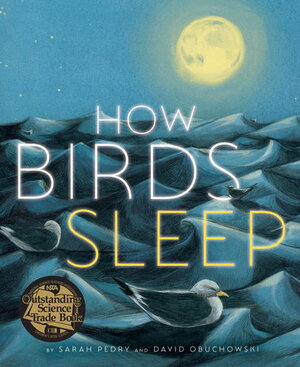
How Birds Sleep
Sarah Pedry and David Obuchowski (BA, ’01, English)
Discover the mysterious and fascinating sleeping habits of more than twenty bird species from around the world in this gorgeously illustrated read-aloud picture book, perfect for bedtime, or any time.
Have you ever seen a bird sleep? Or wondered just when it is that migrating cranes find the time to catch Z’s as they cross the ocean? From the parrots of Thailand to the ostriches of Australia and even the pigeons of New York City, every bird sleeps—but they do it in ways that will surprise and delight you. Some hang from tree branches, others doze while gliding, and some even burrow underground for a nap. Written in a witty, conversational voice, and with gorgeous illustrations, this picture book is bursting with interesting facts about this underexplored aspect of bird life all around us.
Fiction
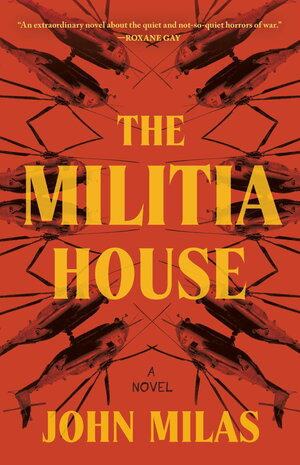
The Militia House
John Milas (BA, '16, creative writing)
Stephen King meets Tim O’Brien in John Milas’s The Militia House, a spine-tingling and boldly original gothic horror novel that was longlisted for the Center for Fiction's First Novel Prize and nominated for the 2023 Shirley Jackson Award.
It’s 2010, and the recently promoted Corporal Loyette and his unit are finishing up their deployment at a new base in Kajaki, Afghanistan. Their duties here are straightforward—loading and unloading cargo into and out of helicopters—and their days are a mix of boredom and dread. The Brits they’re replacing delight in telling them the history of the old barracks just off base, a Soviet-era militia house they claim is haunted, and Loyette and his men don’t need much convincing to make a clandestine trip outside the wire to explore it.
It’s a short, middle-of-the-day adventure, but the men experience a mounting agitation after their visit to the militia house. In the days that follow they try to forget about the strange, unsettling sights and sounds from the house, but things are increasingly . . . not right. Loyette becomes determined to ignore his and his marines’ growing unease, convinced that it’s just the strain of war playing tricks on them. But something about the militia house will not let them go.
Meticulously plotted and viscerally immediate in its telling, The Militia House is a gripping and brilliant exploration of the unceasing horrors of war that’s no more easily shaken than the militia house itself.

Playground
Richard Powers (BA, '78, English)
Four lives are drawn together in this sweeping, panoramic novel, meeting on the history-scarred island of Makatea in French Polynesia, whose deposits of phosphorus once helped to feed the world. Now the tiny atoll has been chosen for humanity’s next adventure: a plan to send floating, autonomous cities out onto the open sea. But first, the island’s residents must vote to greenlight the project or turn the seasteaders away.
Set in the world’s largest ocean, this awe-filled book explores that last wild place we have yet to colonize in a still-unfolding oceanic game, and interweaves beautiful writing, rich characterization, profound themes of technology and the environment, and a deep exploration of our shared humanity.
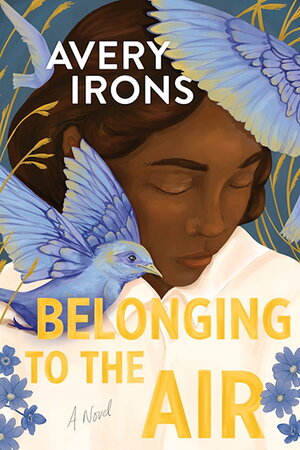
Belonging to the Air
Avery Irons (MFA, '15, creative writing)
In Belonging to the Air: A Novel, author Avery Irons follows one family's intergenerational experience of the Great Migration. Among the novel's cast of characters are a blind matriarch, women who heal with herbs, and queer lovers. Irons's evocative and lyrical prose imagines a world in which these complicated characters try to care for one another in a country that does not care about them. History talks to and through itself as elders confront youngsters and as racism shapeshifts in rural and urban settings across the decades. With dialogue that jumps off the page and rings with a truth that lingers, Belonging to the Air urges readers to think about how constructions of race, love, and freedom have—and have not—changed over time, demanding that we consider the wisdom of our inner selves while we listen to that of our elders.
Non-fiction
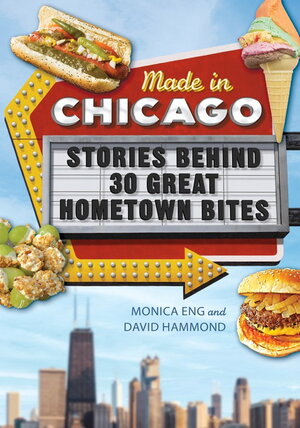
Made in Chicago: Stories Behind 30 Great Hometown Bites
Monica Eng (BA, '91, English) and David Hammond
Italian beef and hot dogs get the headlines. Cutting-edge cuisine and big-name chefs get the Michelin stars. But Chicago food shows its true depth in classic dishes conceived in the kitchens of immigrant innovators, neighborhood entrepreneurs, and mom-and-pop visionaries.
Monica Eng and David Hammond draw on decades of exploring the city's food landscape to serve up thirty can't-miss eats found in all corners of Chicago. From Mild Sauce to the Jibarito and from Taffy Grapes to Steak and Lemonade, Eng and Hammond present stories of the people and places behind each dish while illuminating how these local favorites reflect the multifaceted history of the city and the people who live there. Each entry provides all the information you need to track down whatever sounds good, and selected recipes even let you prepare your own Flaming Saganaki or Akutagawa.
Generously illustrated with full-color photos, Made in Chicago provides locals and visitors alike with loving profiles of a great food city's defining dishes.

TORNADO
Jackie Furtado and Jennifer Haare (BA, '13, English and creative writing)
TORNADO showcases a mustang’s journey in the Sonoran Desert through a careful sequence of GoPro film stills, examining time, motion and its trance-like quality by way of consumer technology. The debut photobook from artists Jackie Furtado and Jennifer Haare makes photography a subject to consider. Through formal experimentation, the book engages with photography’s technological history and questions the medium’s insatiable desire to see, capture, and control.
Sequencing film stills derived from Furtado and Haare’s experimental film, Valley Fever, the book follows the movement of a horse named Tornado, captured by a camera suspended from the horse’s belly. A motion study in book form, the photographs begin to spiral through the book’s layout like a slow-moving tornado as the images succeed into abstraction.
Emerging from the final pages as a playbill, ‘The Horse in Motion: A Tableau Vivant’ by writer and art historian Kim Beil playfully contextualizes the project in early photographic and cinematic history. A sparse poetic text by Jennifer Haare follows, evoking a fragmented narrative of self-discovery within the American mythos of “going west”.